Monday, February 14, 2011


Sunday, February 13, 2011
Friday, February 11, 2011
Thousands of south Yemen protesters demand secession

Observed by: Mr. Alaa Isam
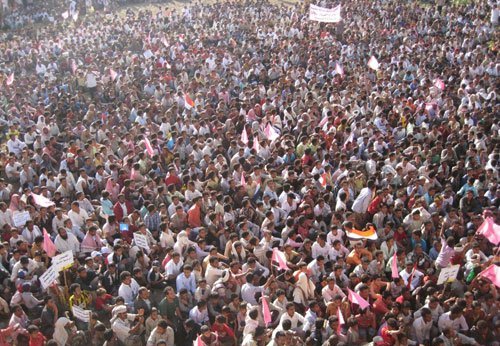
(Reuters) - Around 3,000 people took to the streets across southern Yemen in a "Friday of Rage," demanding secession from the north, but heavily deployed security forces quickly stamped out protests, residents said.
The protests come in the lull after a wave of anti-government rallies spread across Yemen over the past two weeks, inspired by the revolts that ousted Tunisia's former president and the uprising in Egypt that threatens President Hosni Mubarak's 30-year rule.
"Revolution, revolution for the South," protesters chanted in the flashpoint cities of Aden, Dalea and Zinjibar.
Yemen experts say the real danger to the three-decade rule of President Ali Abdullah Saleh, a key U.S. ally against al Qaeda, is if protesters from his political opposition join with rebel groups such as the separatists in the south and the Shi'ite insurgents he has made a shaky truce with in the north.
Though small compared to protests by Yemen's political opposition that attracted tens of thousands, the demonstrations in the south were the first by the separatists since the mass protests in Egypt and Tunisia electrified the Arab world.
North and South Yemen united in a bumpy merger in 1990 that later devolved into civil war four years later. Saleh's forces crushed the secessionist south and reunited the country.
Saleh, eyeing the unrest spreading in the Arab world, indicated last week he would leave office when his term ends in 2013. The president had previously cut taxes and promised salary raises to civil servants and the military.
Such concessions could tempt his political opposition into joining him in a unity government -- they have yet to take an official stand. But southern separatists may not be satisfied.
Many in the south, which holds most of Yemen's oil installations, complain that northerners usurp their resources while denying them their identity and political rights.
Army tanks rolled into Zinjibar, the capital of Abyan, where suspected al Qaeda militants have been active and over a thousand protesters gathered Friday. Hundreds of men sat outside a former South Yemen leader's home, wearing white shrouds to symbolize their readiness to fight to the death.
"Ali, Ali, catch up with Ben Ali," they shouted, implying that Saleh should follow former Tunisian President Zine al-Abidine Ben Ali to exile in Saudi Arabia.
In Aden, police fired shots in the air and arrested four people to break up protests, but around 600 separatist and anti-government protesters regrouped in the Saada neighborhood, which for months has been sealed off by armed men.
Saada, a stronghold for militants in the south, was shelled by security forces last summer after the military clashed with men who the government said were al Qaeda members.
Yemen is the Arab world's poorest state. Forty percent of Yemenis live on less than $2 a day.
(Additional reporting by Mohammed Ghobari and Mohamed Sudam; Writing by Erika Solomon; Editing by Peter Graff)
Source: http://reut.rs/i8qyjz
Thursday, February 3, 2011
Yemeni Protests Unlikely to Have Immediate Impact, Nevens Says
Observed by: Mr. Alaa Isam
Rallies in Yemen are unlikely to have an immediate “tangible impact,” and bringing change to the country’s political system will be far more complicated than in Egypt and Tunisia, said Kate Nevens, manager of the Middle East and North Africa program at Chatham House, a research organization in London. She spoke in a telephone interview.
On the differences between the Yemeni protests and those in Egypt and Tunisia:
“Until now and including today, which has been called a Day of Anger, all the protests have been peaceful in Yemen. So, there is already a marked difference from Tunisia and Egypt.
“In Yemen, people have some similar grievances to the other two countries, but up to a point. Grassroots opposition to President Ali Abdullah Saleh’s regime has been fragmented and has been taking place mostly in governorates outside of the center. There is a much smaller educated, urban bracket and the literacy level is very low, which may mean that it is harder to have mass-mobilized movements.
“In Yemen, you also have a weak formal opposition. The protests are helping to increase their negotiating power. Yemen’s opposition is much more fractured.
On obstacles to change in Yemen:
“Looking at it like a state doesn’t work because it doesn’t function as a state as we know it.” A new leader “would be inheriting a complicated system of patronage networks, not a state.”
“When we think about countries, we think of them in terms of having a president and government. In Yemen, there is a president, a government, and a shadow party elite; and the ministries don’t actually have much power. This shadow party sits around the president, and you’d have to have a dramatic change in how that all works for things to really change.
“Yemeni people see President Saleh as being illegitimate, but the solution is not that obvious.
“It’s great that the protests are happening, but you are looking at a much longer game. But they are very important because even if they don’t have a tangible impact, they do begin to voice concerns around political inclusion in Yemen.”
To contact the reporter on this story: Caroline Alexander in London atcalexander1@bloomberg.net
To contact the editor responsible for this story: Andrew J. Barden at barden@bloomberg.net.
Source: http://bloom.bg/i3jeAS
Wednesday, February 2, 2011
Three wounded in south Yemen clashes

Observed by: Mr. Alaa Isam
Clashes broke out when security forces tried to set up a military site west of the town, witnesses said, adding that three people were wounded.
Medical sources confirmed that the three were taken to the nearby Radfan Hospital, and that one had been transferred to Aden because of the seriousness of his injuries.
Separately, the interior ministry said three soldiers had been kidnapped in Habilayn at the end of January by "outlaw elements" in the Lahij province town.
One one person believed involved in the kidnappings had been arrested.
An official from the Southern Movement, whose members want either independence or increased autonomy for Yemen's south, said on January 18 that southern Yemeni rebels had seized three soldiers on the outskirts of Habilayn.
Tensions were high at the time in the southern movement stronghold, where medics and military sources said on January 17 that one woman had been killed and 11 other people, including seven civilians, wounded in recent clashes.
South Yemen was independent from 1967, when Britain withdrew from Aden, until the region united with the north in 1990.
The south attempted to secede in 1994, sparking a short-lived civil war that ended with it being overrun by northern troops.
The region, where many residents complain of discrimination in the distribution of resources by the Sanaa government, is the site of frequent protests and periodic violence.
Source:http://yhoo.it/h0HWG7
Yemen's Saleh agrees not to run again. Is that good enough for protesters?

Observed by: Mr. Alaa Isam
Yemen's President Ali Abdullah Saleh declared Wednesday that he would not seek reelection in 2013, but protesters plan to keep on demonstrating.
Yemeni President Ali Abdullah Saleh announced today in an emergency parliamentary meeting that he would not run again in Yemen’s upcoming presidential election in 2013. The move is being seen as a major concession to Yemen’s political opposition after Tunisia-inspired protests have broken out across the country over the past two weeks.
“President Ali Abdullah Saleh announced that he would freeze the draft constitutional amendments that are before Parliament denying allegations that there is an intention for hereditary rule in Yemen,” reads a statement from the official Saba news agency in reference to proposed legislation that would abolish presidential term limits and speculation that the Mr. Saleh is going to hand the presidency over to his son Ahmed Saleh.
He added that he will not seek another presidential term in 2013.
Saleh's announcement comes one day before the largest day of demonstrations calling for an end to the corruption of his regime are planned to take place in Yemen’s capital, Sana. The constitutional amendments that Saleh referred to in his speech are part of key contention points between the opposition and the ruling party.
Indeed, the mood remains tense on Sanaa’s streets, crawling with soldiers this morning as the city waits to see what will happen on Thursday in what has been dubbed Yemen’s "day of wrath," using the name Egyptian protesters gave to one of their demonstrations last week.
“[Saleh’s concession] is a reaction to the internal developments in Yemen nationwide, and the developments in the entire region, after what happened in Tunisia and what we are seeing happen in Egypt,” says Hafez Albukari, president of a local, independent nongovernmental organization called the Yemen Polling Center. “He wants to send a clear message to the Yemeni people that he will do some reforms and he will not run again, but I think we should wait for actual implementation of these promises.”
Too little, too late?
And while Saleh's declaration appears to be one step in the direction of prodemocracy reforms, Yemen's opposition says that the president's announcement is too little, too late. They claimed that despite the attempt to quell discontent, Thursday's protests are scheduled to go on as planned
Saleh will present his resignation in a way that is not serious, said Parliament member Ali Ashal who belongs to the leading Al Islah opposition party in a statement to the Monitor on Tuesday.
It will be “theatrics” like the “play of 2006,” when Saleh had announced that he would not run again for the presidency, but then withdrew because of so-called public pressure, Mr. Ashal continued.
And just as Egyptians are not content with the extent of President Hosni Mubarak’s conciliatory gestures, Ashal said that if Yemen’s president really wanted to revive Yemen’s political system, he would announce plans to neutralize Yemen’s military state and decentralize the power system in Yemen, which now is largely viewed to reside solely in the hands of the president.
Yemen Expert at Princeton University Gregory Johnsen agrees that whatever Saleh’s concessions are to the opposition, they are going to need to be big in order to initiate any real change.
“Certainly the opposition could use the events of the past few weeks to its advantage, but at the moment few trust the current government,” Mr. Johnsen wrote in an e-mail to the Monitor. “So the problem becomes: What can the government say or do to the appease those who believe it will break its pledge just as it has in the past,”
All sides are keen to avoid the sort of mass chaos that has struck Egypt during recent weeks. In Yemen — where small arms proliferation is rampant — chaos could become violent very quickly.
Furthermore, Washington remains concerned about the instability in Yemen due to the presence of Al Qaeda in the Arabian Peninsula, the branch of the international terrorist group responsible for two major attack attempts against the US in a little over a year.
Saleh’s move isn’t the only attempt by an Arab leader to avoid mass similar to what has befallenTunisia and Egypt. Yesterday, Jordanian King Abdullah announced that he would dissolve his cabinet after antigovernment protests broke out in his country as well.
Source: http://bit.ly/hVrV8M
Yemen president says won't extend term or pass to son

Observed by: Mr. Alaa Isam
Eying protests that swept Tunisia's leader from power and threaten to topple Egypt's president, Saleh also vowed not to pass on the reins of government to his son. He also appealed to the opposition to call off protests as a large rally loomed.
"I present these concessions in the interests of the country. The interests of the country come before our personal interests," Saleh told his parliament, Shoura Council and members of the military.
"No extension, no inheritance, no resetting the clock," he said, making reference to ruling party proposals on term limits that had been seen as designed to enable him to run again.
The move was Saleh's boldest gambit yet to stave off anti-government turmoil spreading in the Arab world. Analysts said it was an attempt to avert a showdown with the opposition until after regional unrest cools.
Saleh's remarks came a day before a planned large opposition rally, dubbed a "Day of Rage," seen as a barometer of the size and strength of the Yemeni people's will to follow Egyptians and Tunisians in demanding a change of government.
"I call on the opposition to freeze all planned protests, rallies and sit-ins," Saleh said. "I call on the opposition after this initiative to come and form a national unity government in spite of the ruling party majority. We will not allow chaos. We will not allow destruction."
Yemen, already slipping towards becoming a failed state, is trying to fight a resurgent al Qaeda branch, cement peace with Shi'ite rebels in the north and quell separatism in the south, all in the face of crushing poverty. One third of Yemenis suffer from chronic hunger.
RALLY TO GO ON
The biggest opposition party welcomed the initiative but said Thursday's rally in the capital Sanaa would go ahead as planned.
"We consider this initiative positive and we await the next concrete steps. As for our plan for a rally tomorrow, the plan stands and it will be organised and orderly," said Mohammed al-Saadi, undersecretary of the Islamist Islah (reform) party.
"This is a peaceful struggle through which the people can make their voices heard and express their aspirations."
Saleh had already offered lesser concessions on presidential term limits and pledged to raise civil servants' and military salaries by around $47 a month, no small move in a country where about 40 percent of the population lives on less than $2 a day.
However, the pledges on Wednesday went much further.
Saleh promised direct election of provincial governors which would give Yemenis more control over local governance.
He also promised to re-open voter registration for elections due in April in an apparent response to opposition complaints that around 1.5 million Yemenis were unable to sign up.
Such a move would require a delay in the parliamentary elections, giving Saleh time to bring the opposition on board for the vote by persuading them it would be fair.
The president also put on hold all proposed constitutional changes, including on presidential term limits, pending negotiations with the opposition.
Yemen's current rules would require Saleh to step down when his term ends in 2013.
But members of his ruling party had riled the opposition with proposals for constitutional amendments to either lift that limit or impose term limits but allow Saleh to run again.
The opposition tried to rally against lifting term limits in December, but failed to bring large numbers to the street. Last week, however, a protest drew around 16,000 people to demand a change of government. Some called for Saleh to leave.
(Additional reporting by Mohammed Ghobari in Sanaa, Erika Solomon and Mahmoud Habboush in Dubai; Writing by Cynthia Johnston; Editing by Matthew Jones and Paul Taylor)
Source:
Yemen President Says Will Not Seek To Extend His Presidential Term, Or Pass Power To Son

Observed by: Mr. Alaa Isam
Yemeni President Ali Abdullah Saleh said on Wednesday he will not seek to extend his presidency in a move that would bring an end to a three-decade rule when his current term expires in 2013.
Eyeing protests that brought down Tunisia's leader and threaten to topple Egypt's president, Saleh also vowed not to pass on the reins of government to his son.
"No extension, no inheritance, no resetting the clock," Saleh said, speaking ahead of a planned large rally due on Thursday in Sanaa that has been dubbed a "day of rage."
The U.S.-allied Saleh has been in power for nearly 32 years.
Activists and opposition supporters have staged several protests in Sanaa , boldly asking for Saleh's removal and decrying reports he plans to install his son in power.
source: http://on.msnbc.com/eoDwC2