Showing posts with label Human Rights. Show all posts
Showing posts with label Human Rights. Show all posts
Tuesday, December 13, 2011


Saturday, March 5, 2011
Yemen police arrest 16 anti-regime protesters
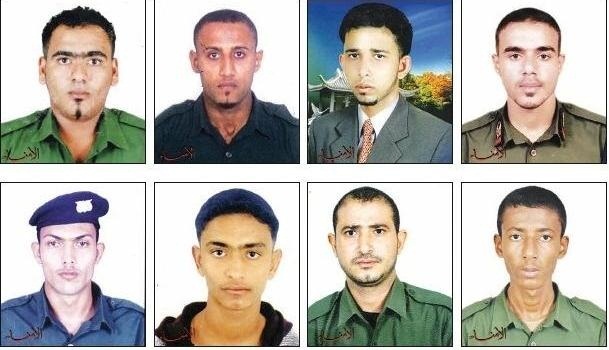
Yemeni security forces arrested 16 protesters in Aden on Saturday, as thousands continued to demonstrate in the south demanding the fall of the regime of President Ali Abdullah Saleh.
The anti-government demonstrators were nabbed as police dispersed protesters who were gathering to hold a sit-in outside Al-Nur mosque in Aden, police said.
Witnesses said police used tear gas and fired warning shots to disperse the protesters and that two demonstrators were wounded after being beaten with batons.
Meanwhile, thousands of anti-government protesters took to the streets in the city of Ataq, in the eastern province of Shabwa, on the third consecutive day of protests, witnesses said.
"People want to topple the regime," demonstrators chanted, echoing a slogan that has gripped many Arab capitals and that has already forced the presidents of Tunisia and Egypt to quit.
An MP from the neighbouring Al-Bayda province announced Friday his resignation from the ruling party of Saleh in protest to using force against demonstrators.
Ali al-Umrani announced his decision to quit the General People's Congress and join anti-government protests at an anti-Saleh demonstration in the capital, Sanaa.
Another member of the GPC, prominent businessman Nabil al-Khameri, also announced his resignation to protest the violence.
Eleven MPs who had quit GPC last week have since announced forming a new parliamentary bloc, named as the "Free Deputies", headed by MP Abdo Bisher.
Yemeni troops killed four demonstrators and wounded seven others on Friday when they fired on an anti-regime rally in the northern Amran province, officials and Shiite rebels said.
The shooting came a day after the opposition and clerics offered embattled Saleh a smooth exit from power.
Saleh's government has been rocked by a wave of protests in which at least 19 people have been killed since February 16, according to an AFP toll based on reports and witnesses.
Rights group Amnesty International has put the toll at 27.
source: http://yhoo.it/dXfs66
Monday, February 28, 2011
Arrest of a number of university professors in Aden

Observed by: Mr. Alaa Isam
On Feb 26, 2011 the Yemen security has arrested numbers of Aden's University, their names :
1. Dr. Abdul Hamid Shukri, Professor of surgery, faculty of Medicine
2. Dr. Aidroos Yahri, Professor at faculty of Engineering
3. Dr. Abdul Khaliq Salah, from Bashib Military-hospital in Aden
4. Dr. Yahia Shuaibi, Professor of Arabic language, faculty of Art
SECURITY FORCES IN YEMEN BLOCK ACCESS TO HOSPITAL

26 February 2011
Amnesty International has received reports that security forces in Yemen refused to allow residents to take the injured to hospital after Central Security forces fired on anti-government protesters and bystanders on Thursday when at least 11 people were killed.
Security forces fired on protesters from armoured vehicles, as well as attacking houses where protesters were believed to have been seeking shelter. Two men were said to have been killed in their houses during a period of intensive gunfire, both of them shot in the head.
"Events in Yemen are taking a serious turn for the worse and the Yemeni security forces are showing reckless disregard for human life," said Philip Luther, Amnesty International's Deputy Director for the Middle East and North Africa.
"The Yemeni authorities have a duty to ensure that those injured receive medical treatment. They must on no account block access to urgently needed medical assistance, particularly when people’s lives may be at risk."
One doctor told Amnesty International: "I went to the al-Mu'alla area to take those injured to hospital, but when I reached there, security forces refused to allow me in, and told me to go back. I showed them my ID, and told them that I was a doctor and wanted to help the injured who were bleeding in the streets. But security forces said to me: 'Let them die!' I had to go back."
The death toll in recent protests calling on the Yemeni president to stand down has now reached 27, with an average of nearly three people killed every day since 16 February. Twenty-four of them have been killed in Aden, two in Sana’a and one in Ta’izz.
"The authorities must launch a prompt and independent investigation into the killings of protesters and bystanders in Yemen and reports of denial of access to medical assistance," said Philip Luther.
"Amnesty International has repeatedly warned the Yemeni authorities to rein in their security forces. Their heavy-handed tactics against protesters must immediately cease."
READ MORE
Yemen urged to halt escalating crackdown after two reported killed in capital (News, 23 February 2011)
Demanding Change In The Middle East And North Africa (News and multimedia microsite)
source: http://bit.ly/e3R3HA
Sunday, February 27, 2011
Yemen: Security Forces, Gangs Attack Reporters
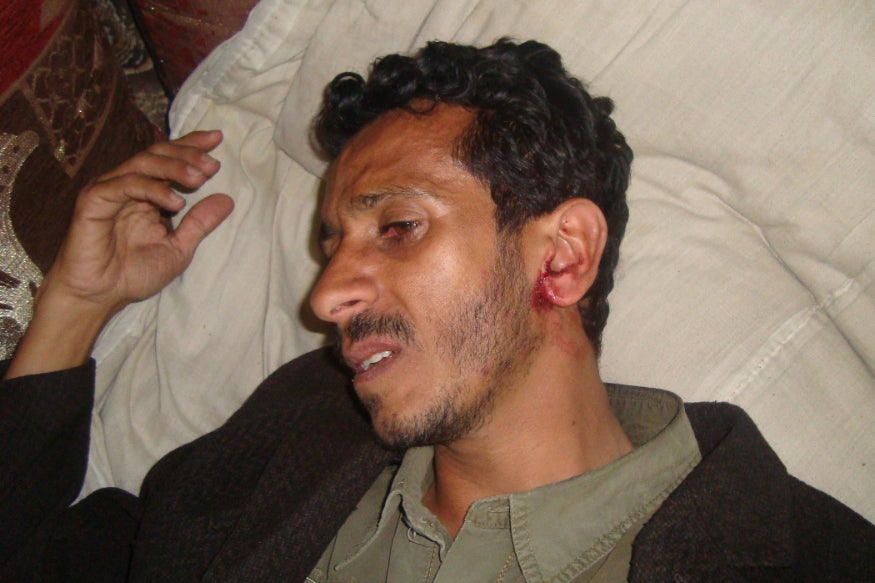
At Least 31 Journalists Beaten, Harassed During Demonstrations
State security forces have participated in or stood by during brutal attacks on journalists covering the February 2011 demonstrations against Yemen's president, Human Rights Watch said today. Security forces or armed supporters of the president have beaten or harassed at least 31 international and Yemeni journalists in an effort to quash reporting on the protests.
"Beating up journalists is a blatant attempt by the authorities to prevent the Yemeni people and the world from witnessing a critical moment in Yemen," said Sarah Leah Whitson, director of the Middle East and North Africa division at Human Rights Watch. "Yemeni authorities should halt these attacks and promptly bring assailants, including security officials, to justice."
Human Rights Watch interviewed five journalists who were attacked by security forces or as security officials watched. Human Rights Watch also obtained information on 20 incidents of attacks, detention, or harassment of journalists from the Yemeni Journalists Syndicate, and additional cases from the Committee to Protect Journalists and Reporters Without Borders.
The journalists who were attacked represented media including the Al-Arabiya and Al Jazeera satellite television channels; Al-Quds al-Arabi and the Guardian newspapers; news agencies including the BBC, The Associated Press, Reuters, and Agence France-Presse; and news websites including Bern-based Swissinfo and Yemen's Marib Press.
Human Rights Watch said the attacks are part of an escalating crackdown on the media by Yemeni President Ali Abdullah Saleh's security forces, who have harassed, beaten, or illegally detained scores of journalists over the past two years for independent or critical coverage. A government spokesman did not return repeated requests for comment.
Many of the attacks during February 2011 anti-government demonstrations took place at or near the main square at Sanaa University, the central gathering place for anti-Saleh protesters in the capital. In one incident, Abd al-Karim Sallam, a reporter for Swissinfo, said three plainclothes security agents attacked him while he was taking a bus to the protests around 9:30 p.m. on February 20, because they overhead him and a colleague describe pro-government protesters as "thugs."
"We can always recognize them by their style and haircuts," Sallam, who was hospitalized from the attack and days later still wore a bandage on his left cheek, said of the security agents. "As soon as we mentioned the thugs moving toward the square, one of them started talking to us very aggressively, saying, ‘You are the thugs; it's all your fault; you journalists are destroying the country.' I tried to talk to them, but one of them just punched me in the face with a heavy blow, then got my head into a lock with his arm, and then all three of them started beating me on the head and back."
When the bus stopped, the agents "started shouting to the thugs who were nearby to come and get us, but we managed to jump out and escape," Sallam said.
In another incident, the head of the country's US-funded Counter-Terrorism Unit and a specialized police officer in plainclothes failed to intervene in attacks on three television journalists at Sanaa University square the night of February 18.
Al-Arabiya's Sanaa bureau chief Hamoud Munasser, his cameraman Fu'ad al-Khadhr, and freelancer Muhammad Sa'id al-Sharabi told Human Rights Watch that their ordeal began when a mob beat them with sticks and took their camera. Munasser and al-Khadhr still had visible bruises on their arms and legs a few days later.
Al-Khadhr said that as he was filming, he suddenly saw about 200 government supporters armed with stones and sticks rush toward demonstrating students. Munasser said about 20 men who diverted from the larger group began "violently beating [al-Khadhr] on the head and all over his body with sticks" before attacking him.
"I grabbed the camera and ran to try to lead the thugs away from al-Khadhr, but they quickly caught up with me," Munasser said. "They grabbed the camera, tore off the screen and the lens, and pulled it out of my hands."
As the three journalists fled toward their nearby car, Munasser spotted the director of the Yemeni Counter-Terrorism Unit, a US-funded division of the Interior Ministry, whom he knew. The counterterrorism official called the interior minister on his cell phone and let Munasser describe the attack, but the minister dismissed the incident as "impossible," before ultimately promising to investigate, Munasser said.
Meanwhile, about five of the assailants caught up with the journalists and began smashing their car with sticks and stones. The counterterrorism director, accompanied by a plainclothes official who Munasser recognized as a member of the Criminal Investigation Department, saw the attack but did not stop it, Munasser said. He said the interior minister told him three days later that he could not find the attackers.
In a third incident, a plainclothes security officer watched and spoke into a radio as a group of government supporters attacked Muhi al-Din Jarma, who reports for London-based Al-Quds and Yemeni newspapers. Jarma, who suffered head injuries and internal bleeding from the attack, told Human Rights Watch he fled the university square the night of February 17 when government supporters began throwing rocks at demonstrators. A group of 9 or 10 men chased him and beat him with sticks until he began bleeding profusely.
"He [the plainclothes policeman] watched them beating me for some time, but then approached, told them, ‘Enough,' and led me toward an ambulance," Jarma said. "For a moment, I felt safe, but then I saw that the ambulance was also surrounded by government supporters with sticks. The officer led me closer to the crowd and just left me there. The thugs immediately attacked me again, and kept beating me with sticks and kicking me as I was trying to make my way to the ambulance.
In addition to attacks at protests, a specialized police anti-piracy unit arrested 18 journalists from the newspaper Al-Yaqeen in Aden on February 18, according to the Committee to Protect Journalists. The newspaper had reported on the anti-government demonstrations in detail and named the protesters who were killed or injured.
The Yemeni Journalists' Syndicate sent the Ministry of Interior details of each attack it documented, requesting an investigation, the union's secretary general, Marwan Dammaj, told Human Rights Watch. So far, the ministry has not responded, Dammaj said, adding that "At most, they refer the cases to the police to investigate."
Human Rights Watch has previously documented how security forces failed to intervene and facilitated attacks on anti-government protesters.
Freedom of expression is a basic human right, set out in the International Covenant on Civil and Political Rights (ICCPR). Yemen has been a party to the ICCPR since 1987. Article 19 guarantees all individuals the "freedom to seek, receive and impart information and ideas of all kinds, regardless of frontiers, either orally, in writing or in print, in the form of art, or through any other media."
Saleh on February 23 promised to prevent clashes at anti-government demonstrations and protect the right to freedom of expression.
"Saleh needs to make good on his promise to protect journalists and peaceful protesters," said Whitson. "Security is not a justification for muzzling free speech or curtailing other basic human rights."
Reporters Attacked, Harassed or Injured During February 2011 Anti-Government Demonstrations
Sources: Yemeni Journalists Syndicate (YJS), Human Rights Watch (HRW), Committee to Protect Journalists (CPJ), Reporters Without Borders (RWB)
1. Khalil al-Berh, detained for half-hour in car by security officials, digital camera confiscated and returned with memory deleted, Sanaa, February 13. [YJS, CPJ]
2. Khalid al-Mahdi, photographer for Reuters, detained and camera confiscated, Sanaa, February 13. [YJS, CPJ]
3. Hani al-Ansi, photographer for The Associated Press, camera confiscated, Sanaa, February 13. [YJS, CPJ]
4. Wajdi Assalmi, of Hadith al-Madina newspaper, beaten by armed men and camera destroyed, Sanaa, February 13. [YJS, CPJ]
5. Samia al-Aghrabi, fell and injured head while fleeing armed men, February 13. [YJS, CPJ]
6. Abdallah Gorab, correspondent for the BBC, beaten with sticks by men armed with knives and guns, Sanaa, February 14. Attackers brought Gorab to Yemeni government official Hafez Meiyad, an associate of the president, who rebuked him for tarnishing Yemen's reputation, the BBC reported. [YJS, CPJ, BBC]
7. Mohamed Omran, cameraman for BBC, beaten and watch stolen in same attack as Abdallah Gorab, Sanaa, February 14. [CPJ, BBC]
8. Majid Shuaibi, Mareb Press, attacked and camera confiscated by armed men, Sanaa, February 14. [YJS]
9. Salah Saleh, beaten and detained at demonstration, Taizz, February 15. [YJS]
10. Hassan al-Watat, beaten by armed men, February 16. [CPJ]
11. Ahmed Ghrasi, photographer for Agence France-Presse, beaten and camera confiscated, Sanaa, February 17. [YJS, CPJ]
12. Yahya Arhab, European Pressphoto Agency, attacked and camera confiscated, Sanaa, February 17. [YJS, CPJ]
13. Adel Abdulmughni, reporter for Al-Wahdawi newspaper, attacked and camera confiscated, Sanaa, February 17. [YJS, CPJ]
14. Amr Awd, Reuters, beaten and camera confiscated, Sanaa, February 17. [YJS, CPJ]
15. Samir al-Namri, al-Jazeera, beaten and camera destroyed, Sanaa, February 17. [YJS, CPJ]
16. Muhi al-Din Jarma, reporter for Al-Quds, suffered severe head injuries and internal bleeding after beating by armed men while a plainclothes policeman watched, Sanaa, February 17. [HRW, YJS]
17. Akram al-Talyae, verbally abused, physically assaulted and camera confiscated, Sanaa, February 17. [YJS]
18. Tom Finn, correspondent for the Guardian, attacked by a group of men in Sanaa, February 17. [RWB]
19. Yasser al-Ma'amari, photographer for al-Qatariya, no further details, Sanaa, February 18. [RWB]
20. Hamoud Munasser, Sanaa bureau chief for Al-Arabiya, beaten with sticks by armed men, Sanaa, February 18. Car attacked by same group in front of director of US-funded Counterterrorism Unit and a Central Investigation Department official. [HRW, YJS, RWB]
21. Fu'ad al-Khadhr, cameraman for Al-Arabiya, beaten and camera seized by armed men in Sanaa, February 18. [HRW, YJS, RWB]
22. Muhammad Sa'id al-Sharabi, freelance reporter, attacked by men armed with sticks, Sanaa, February 18. [HRW]
23. Abd al-Qawi al-Soufi: Al-Arabiya cameraman, beaten by pro-government supporters and his camera broken, February 18. [CPJ]
24. Awsan al-Qaatabi, correspondent for Iran's al-Alam TV, attacked, Sanaa, February 18. [YJS, RWB]
25. Yasser al-Maamari, cameraman for Qatar TV, attacked, Sanaa, February 18. [RWB]
26. Abd al-Karim Sallam, a correspondent for Swissinfo, attacked by armed men as a plainclothes government security officer watched, subsequently hospitalized, Sanaa, February 20. [HRW, YJS, RWB]
27. Zaki Saqladi, correspondent for al-Masdar Online, attacked, car and camera seized, ad-Dali, February 22. [RWB]
28. Marzouq Yasin, freelance journalist, detained by security forces while covering protest, Aden, February 25. [CPJ]
29. Abdel Rahman Anis, freelance journalist, detained by security forces while covering protest, Aden, February 25. [CPJ]
30. Bassim al-Shaabi, freelance journalist, detained by security forces while covering protest, Aden, February 25. [CPJ]
31. Fares al-Jalal, freelance journalist, detained by security forces while covering protest, Aden, February 25. [CPJ]
Source: Via Human Rights Watch http://bit.ly/fI57va
Tuesday, February 22, 2011
Yemeni women expose sexual harassment by taxi drivers
Written By: Fares Anam
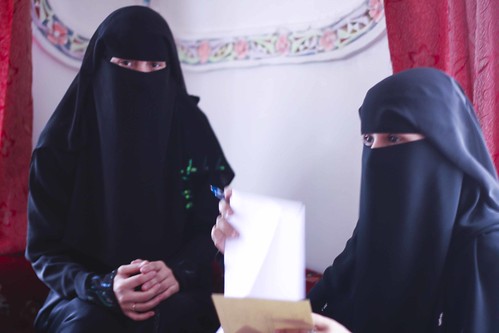
Samah, 25, lives in Sana’a. She woke up one morning to go to work. She stopped a taxi and asked the driver to take her to work. While in the backseat, she noticed the taxi driver staring at her in the car mirror.
She was then surprised to sees him turn towards her and then he tried to fondle her body. She screamed and quickly got out of the taxi. Samah said that this was the third time that she had been exposed to sexual harassment by taxi drivers.
“They look in the mirror of the taxi, talk bad words in any subject, even if the girl doesn’t talk. This is harassment,” said Samah. And she is not alone in facing this problem.
A.E., 23, is from Sana’a and is a student at Sana’a University. She decided to take a taxi one day because she was late for a university lecture. As she drove in the taxi, the driver began asking her about the place she was going. She told him again that she wanted to go to Sana’a University. The driver then began ask her about her name and spoke words of love.
“I loved you when I saw you,” he told her and followed that up with some more obscene words. Enraged, she flew out of the taxi in hurry. Then she took another taxi but faced the same problem. And so vowed never to take a taxi again. Scores of women in Sana’a complain that taxi drivers often harass them. These drivers, they say, suffer from ignorance, a disdain for women and from a bias against women who leave their homes to work.
Shameful behavior Women say that these ill-behaved drivers will try many tactics to get the attention of females. Sua’ad al-Qadasi, chairperson of the Women’s Forum for Research and Training, said that she has heard a number of stories from women who have experienced taxi driver harassment. “I have received a lot of complaints from women saying that they were exposed to shocking words and some bad people who touch their bodies when they use taxis and especially also in buses,” said al-Qadasi. “This is shameful behavior and against Yemeni traditions. This bad behavior is due to the lack of education among people.” She also said that some men ask girls why they are leaving their homes and tell them that they should stay at home where they belong.
“The harassment starts with bad words. Other people do nothing and stay silent and then men touch the girl’s bodies,” said al-Qadasi. Those who can afford taxis do so because this is often the most efficient way to get from place to place. Women sometimes also assume that taxis will be safer than taking a bus where men commonly will try to put their hands on a woman’s knee.
Recently, with the entry of private sector investment in the public transport sector, some improved taxi services have emerged. Women feel safer in cars associated with a reliable taxi company. Several transport companies have been emerged recently in Sana’a. This includes the Raha Company which launched in Yemen in February 2005. It was followed by other companies, such as Marhaba and Karowah.
These companies use metered cars with standard fares. These cars allow passengers the opportunity to avoid the hassle of haggling for a good price. Also, many women have turned to these taxi companies because they feel safer in cars associated with a specific company that can be easily tracked. New companies are safer Majedah Ali, a university student, said that she preferred newer taxi companies. “They have controlled tariffs. There is harassment from the owners of old taxis because there is nobody that you can complain to about them. But those taxi drivers from better companies cannot do anything bad because there is a company behind them,” she said. Most Yemeni women prefer to avoid unmarked taxis because drivers in these vehicles often harass their female passengers. However, sometimes there is little choice.
Safa, who has always taken taxis, said that if she is in a hurry to go somewhere and finds an old taxi she would still take it. “But if I was not in a hurry, I would look for a new taxi. This makes the journey more relaxing for me. Sometimes I am exposed to harassment from the owners of taxis and they send me bad hints. Then I get out immediately,” said Safa. “New taxis have increased significantly and this will badly hurt the old taxi owners.” Saba al-Jaradi said that she prefers to take only new taxis because she feels comfortable and safe in them. “The old taxis are so terrible and it is broken and unclean.
I have not been exposed to harassment by taxi drivers, but I heard from my friends who received such harassment from disrespectful taxi drivers,” she said. Ebrahim Abdullah, a taxi driver, said that females are the reason behind bad behavior from taxi drivers.
“They do many things to tempt the taxi drivers, like their wearing attractive clothes and displaying tempting moves,” he said. Adnan Abdullah, another taxi driver, said that there are many drivers who do not have morals and no honor and they use their car as a place for harassment. “There are women who exploit drivers and play with them.
The extreme poverty is the main reason that the drivers resort to such things,” he said. The owners of old taxis feel disappointed and hopeless because the new taxis are taking their customers away from them. People prefer the new taxis for their cleanliness, modernity, affordability and safety. “Work has become very bad and it’s getting worse every day because the new taxis have spread. Most people who have money buy new taxis to earn more money. It is an investment,” said Salem Mohsen who has an old taxi.
Lack of religious beliefs Raha and other new taxis have had a good reception from Yemeni people but has encountered a number of rumors originating from old taxi owners. Some of these older drivers say that the new taxis are also involved in bad behavior.
Mohsen said that some women use these new taxis because it gives them more prestige and makes them look good. Adnan Abdullah, a taxi driver with the Raha Company, said that Raha drivers face some harassment and problems from the owners of old taxis. “They think that we took their work. It is ridiculous talking and I say to them that our livelihood is from God,” said Abdullah. There are some drivers who like to harass women but they are punished, said Abdullah. Hussam, a university student, said that the media also plays an important role in combating taxi drivers and their sexual harassment against women. “There should be an awareness campaign about it,” he said. Al-Qadasi said that the government should create awareness programs in all media to change the society’s behavior against women.
Many religious scholars believe that this phenomenon is due to the weakness of the driver’s Islamic beliefs. Mohamed Ahmed, a religious man, said that they lack the feeling of God’s scrutiny.
Samah thinks that many taxi drivers only bought a taxi to hunt women. “Most of them are rich and do not need to work in a taxi but their intentions are to chase girls in the street. This is shameful,” she said. “They have to ask themselves what if their sisters or mothers were exposed to such acts in any other taxi. What will they do?”
She was then surprised to sees him turn towards her and then he tried to fondle her body. She screamed and quickly got out of the taxi. Samah said that this was the third time that she had been exposed to sexual harassment by taxi drivers.
“They look in the mirror of the taxi, talk bad words in any subject, even if the girl doesn’t talk. This is harassment,” said Samah. And she is not alone in facing this problem.
A.E., 23, is from Sana’a and is a student at Sana’a University. She decided to take a taxi one day because she was late for a university lecture. As she drove in the taxi, the driver began asking her about the place she was going. She told him again that she wanted to go to Sana’a University. The driver then began ask her about her name and spoke words of love.
“I loved you when I saw you,” he told her and followed that up with some more obscene words. Enraged, she flew out of the taxi in hurry. Then she took another taxi but faced the same problem. And so vowed never to take a taxi again. Scores of women in Sana’a complain that taxi drivers often harass them. These drivers, they say, suffer from ignorance, a disdain for women and from a bias against women who leave their homes to work.
Shameful behavior Women say that these ill-behaved drivers will try many tactics to get the attention of females. Sua’ad al-Qadasi, chairperson of the Women’s Forum for Research and Training, said that she has heard a number of stories from women who have experienced taxi driver harassment. “I have received a lot of complaints from women saying that they were exposed to shocking words and some bad people who touch their bodies when they use taxis and especially also in buses,” said al-Qadasi. “This is shameful behavior and against Yemeni traditions. This bad behavior is due to the lack of education among people.” She also said that some men ask girls why they are leaving their homes and tell them that they should stay at home where they belong.
“The harassment starts with bad words. Other people do nothing and stay silent and then men touch the girl’s bodies,” said al-Qadasi. Those who can afford taxis do so because this is often the most efficient way to get from place to place. Women sometimes also assume that taxis will be safer than taking a bus where men commonly will try to put their hands on a woman’s knee.
Recently, with the entry of private sector investment in the public transport sector, some improved taxi services have emerged. Women feel safer in cars associated with a reliable taxi company. Several transport companies have been emerged recently in Sana’a. This includes the Raha Company which launched in Yemen in February 2005. It was followed by other companies, such as Marhaba and Karowah.
These companies use metered cars with standard fares. These cars allow passengers the opportunity to avoid the hassle of haggling for a good price. Also, many women have turned to these taxi companies because they feel safer in cars associated with a specific company that can be easily tracked. New companies are safer Majedah Ali, a university student, said that she preferred newer taxi companies. “They have controlled tariffs. There is harassment from the owners of old taxis because there is nobody that you can complain to about them. But those taxi drivers from better companies cannot do anything bad because there is a company behind them,” she said. Most Yemeni women prefer to avoid unmarked taxis because drivers in these vehicles often harass their female passengers. However, sometimes there is little choice.
Safa, who has always taken taxis, said that if she is in a hurry to go somewhere and finds an old taxi she would still take it. “But if I was not in a hurry, I would look for a new taxi. This makes the journey more relaxing for me. Sometimes I am exposed to harassment from the owners of taxis and they send me bad hints. Then I get out immediately,” said Safa. “New taxis have increased significantly and this will badly hurt the old taxi owners.” Saba al-Jaradi said that she prefers to take only new taxis because she feels comfortable and safe in them. “The old taxis are so terrible and it is broken and unclean.
I have not been exposed to harassment by taxi drivers, but I heard from my friends who received such harassment from disrespectful taxi drivers,” she said. Ebrahim Abdullah, a taxi driver, said that females are the reason behind bad behavior from taxi drivers.
“They do many things to tempt the taxi drivers, like their wearing attractive clothes and displaying tempting moves,” he said. Adnan Abdullah, another taxi driver, said that there are many drivers who do not have morals and no honor and they use their car as a place for harassment. “There are women who exploit drivers and play with them.
The extreme poverty is the main reason that the drivers resort to such things,” he said. The owners of old taxis feel disappointed and hopeless because the new taxis are taking their customers away from them. People prefer the new taxis for their cleanliness, modernity, affordability and safety. “Work has become very bad and it’s getting worse every day because the new taxis have spread. Most people who have money buy new taxis to earn more money. It is an investment,” said Salem Mohsen who has an old taxi.
Lack of religious beliefs Raha and other new taxis have had a good reception from Yemeni people but has encountered a number of rumors originating from old taxi owners. Some of these older drivers say that the new taxis are also involved in bad behavior.
Mohsen said that some women use these new taxis because it gives them more prestige and makes them look good. Adnan Abdullah, a taxi driver with the Raha Company, said that Raha drivers face some harassment and problems from the owners of old taxis. “They think that we took their work. It is ridiculous talking and I say to them that our livelihood is from God,” said Abdullah. There are some drivers who like to harass women but they are punished, said Abdullah. Hussam, a university student, said that the media also plays an important role in combating taxi drivers and their sexual harassment against women. “There should be an awareness campaign about it,” he said. Al-Qadasi said that the government should create awareness programs in all media to change the society’s behavior against women.
Many religious scholars believe that this phenomenon is due to the weakness of the driver’s Islamic beliefs. Mohamed Ahmed, a religious man, said that they lack the feeling of God’s scrutiny.
Samah thinks that many taxi drivers only bought a taxi to hunt women. “Most of them are rich and do not need to work in a taxi but their intentions are to chase girls in the street. This is shameful,” she said. “They have to ask themselves what if their sisters or mothers were exposed to such acts in any other taxi. What will they do?”
Source: http://bit.ly/hcPMDV
Thursday, February 17, 2011
Protester dies in south Yemen, 8 wounded

(Reuters) - A protester was killed by "random gunfire" as police tried to disperse an anti-government demonstration in southern Yemen, a local official said on Thursday.
"At least one person has been killed and there are eight others that were wounded by random gunfire," said the official who is a member of the municipal council, declining to be named.
(Reporting by Mohammed Mukhashaf; Writing by Erika Solomon; Editing by Amran Abocar)
Source: http://reut.rs/f6Yh26
Wednesday, February 16, 2011
Subscribe to:
Posts (Atom)