Saturday, January 14, 2012


Sunday, February 27, 2011
Saleh vows to resist Yemen protests

AFP: by Hammoud Mounassar
Despite two weeks of escalating protests demanding that he step down, after uprisings in Egypt and Tunisia forced the resignations of Hosni Mubarak and Zine El Abidine Ben Ali, Saleh has repeatedly refused to resign.
In his latest comments, reported by the state-run Saba news agency on Sunday, he accused his opponents of trying to revive secessionist efforts that sparked a short-lived civil war in 1994.
"There is a conspiracy against Yemen's unity and territorial integrity and we, in the armed forces, have served to preserve the republican regime with every drop of blood we have," Saba quoted Saleh as saying.
"We are trying in every way possible to deal with and overcome these difficulties democratically, through dialogue with all political leaders, but in vain."
His one concession has been to pledge not to seek re-election in 2013.
An AFP tally based on reports by medics and witnesses shows that at least 19 people have been killed in almost daily clashes since February 16.
Amnesty International has put the toll at 27, an average of nearly three killed every day, since the protests began. Most of the victims were killed in the southern city of Aden, with two in Sanaa and one in Taez in the north.
On Sunday, five protesters were wounded as police dispersed a demonstration of students calling for the fall of the regime, in the city of Mukala, in Hadramawt province.
Medics said one protester was wounded by a bullet, and the other four injured were beaten by batons.
But a local official quoted by Saba said police did not clash with demonstrators in Mukala, insisting that a confrontation took place between protesters and "rioters with batons who infiltrated" the demonstration.
Pressure on Saleh to bow out intensified on Saturday when the leaders of Hashid and Baqil, two of Yemen's most important tribes, abandoned him and joined the anti-regime movement.
The protests have been strongest in south Yemen, which united with the Saleh-ruled north only in 1990.
The south attempted to secede in 1994, sparking a short-lived civil war that ended with the region being overrun by northern troops.
In an address to military and police forces late on Saturday, Saleh accused southerners of again seeking to secede and "divide Yemen" and northerners of aiming to reinstate the monarchy that ruled the country until 1962.
The south has been the site of the deadliest violence since the start of the protests, with four people killed in a Friday night police assault on an anti-government protest in Aden.
A security source told AFP that five Southern Movement activists, including former diplomat Qassem Askar, were arrested on Sunday on suspicion of having fomented violence in a massive demonstration on Friday.
The demonstration, dubbed "the beginning of the end" of his regime which swept to power in Sanaa in 1978, saw an estimated 100,000 Yemenis turn out across the country.
Human rights group Amnesty International has said it received reports the security forces refused to allow the wounded to be taken to hospital after the attack.
But a Yemeni security official denied there was a police raid, blaming the deaths instead on the secessionist Southern Movement, according to the 26sep.net website of the defence ministry's newspaper.
In the capital, students on Sunday maintained a sit-in outside Sanaa University, where they have vowed to remain until the fall of Saleh's regime.
And in Taez, south of Sanaa, protesters continued their second week camping out in a main square to demand that Saleh stand down.
Situated at the strategic southern tip of the Arabian Peninsula, Yemen -- the ancestral home ofOsama bin Laden -- has been fighting Al-Qaeda insurgents in its south and east.
It is a key partner in the "war on terror" being waged by the United States, which maintains a major counter-terrorism base in Djibouti across the Bab al-Mandab strait in the Horn of Africa.
Source: http://yhoo.it/gLaqdD
Thursday, February 24, 2011
Nine dead and 80 injured amidst violent clashes in Aden

and Imad al-Sakkaf
Published:24-02-2011
During the past two days a security belt has been imposed among the city’s districts at crossroads and street junctions leading to the bus stop in al-Mansoura which has been occupied by a youth sit-in, demanding the regime step-down.
Sources say the number of people performing the sit-in is not large and it varies from place to place. Sources also state that the numbers decrease during the day and increases remarkably at night. The same sources said that trade and economic activities have largely been paralyzed in Aden and many shops and restaurants have closed their doors due to the violence taking place.
Last week a teenager named Ali al-Khulaqi was injured in Khour Maksar and later died of his injuries. Local sources said that a Central Security Forces shot Ali and his friends while they were demonstrating near al-Jamhouri hospital by burning tires.
According to youth activist Ala’a al-Aghbari of Aden, the reasons behind the large number of recent casualties is the absence of the press, poorly organized demonstrations and the fear that Aden may fall into the hands of the Southern separatists.
Earlier this week, security forces arrested Mr. Hassan Ba Oum, a leader of the Southern Movement after breaking through the hospital in which he was receiving treatment after suffering a heart attck. Well-placed sources indicate that Ba Oum was transferred to Sana’a by air.
Since the outbreak of the protests demanding president Saleh’s resignation, government departments and schools in Aden have undergone a total paralysis while traffic has increased. Al-Mansoura district is still completely shut by the army and cars are unable to enter Aden between 6:00pm until 6:00am.
Khour Maksar witnessed violent actions that included burning tires and stone throwing on al-Arish road. Gunfire was exchange by the army and militants said to belong to the Abyan governorate.
In al-Mansora the local council building was burned in addition to a number of vehicles among which were vans and a patrol car. Another local council bulding was also burned in Sheikh Othman on Friday and its member resigned in protest against the use of live bullets against demonstrators and a security patrol car was subject to drive-by shooting from an identified car resulting in the injury of two soldiers.
Sira local council’s members also resigned and that of al-Mansoura suspended its activities until further notice for the same reason.
As a part of the resignation series, Dr. Abdul Bari Dughaish, an MP representing consistuency 28 of Dar Sa’ad resigned from the ruling party as the second GPC member after Mr. Abdul Karim Al-Aslami of Hajja governorate to leave the party.
Women’s demonstrations
For the first time since the outbreak of the current protests against the political system, an all-woman demonstration in Crater Tuesday evening led by teachers, rights activists and politicians.
Sources informed Yemen Times that some persons described as “interpolated” tried in vain to obstruct the march comprised of tens of Yemen. It was remarkable that the demonstration included leading women from Yemen Children League party (Ra’ai) after the party’s express statement in Aden last Saturday that it will join people requesting the political regime in Yemen to leave. Students of Engineering College at Aden University at al-Mulla’a protested last Tuesday in solidarity with the persons killed and injured in Aden and aksed for the regime to leave.
Wednesday, February 23, 2011
Tuesday, February 22, 2011
Yemeni women expose sexual harassment by taxi drivers
Written By: Fares Anam
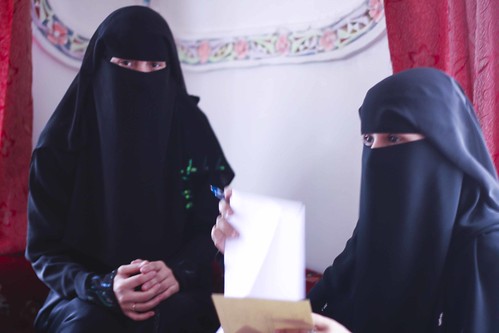
She was then surprised to sees him turn towards her and then he tried to fondle her body. She screamed and quickly got out of the taxi. Samah said that this was the third time that she had been exposed to sexual harassment by taxi drivers.
“They look in the mirror of the taxi, talk bad words in any subject, even if the girl doesn’t talk. This is harassment,” said Samah. And she is not alone in facing this problem.
A.E., 23, is from Sana’a and is a student at Sana’a University. She decided to take a taxi one day because she was late for a university lecture. As she drove in the taxi, the driver began asking her about the place she was going. She told him again that she wanted to go to Sana’a University. The driver then began ask her about her name and spoke words of love.
“I loved you when I saw you,” he told her and followed that up with some more obscene words. Enraged, she flew out of the taxi in hurry. Then she took another taxi but faced the same problem. And so vowed never to take a taxi again. Scores of women in Sana’a complain that taxi drivers often harass them. These drivers, they say, suffer from ignorance, a disdain for women and from a bias against women who leave their homes to work.
Shameful behavior Women say that these ill-behaved drivers will try many tactics to get the attention of females. Sua’ad al-Qadasi, chairperson of the Women’s Forum for Research and Training, said that she has heard a number of stories from women who have experienced taxi driver harassment. “I have received a lot of complaints from women saying that they were exposed to shocking words and some bad people who touch their bodies when they use taxis and especially also in buses,” said al-Qadasi. “This is shameful behavior and against Yemeni traditions. This bad behavior is due to the lack of education among people.” She also said that some men ask girls why they are leaving their homes and tell them that they should stay at home where they belong.
“The harassment starts with bad words. Other people do nothing and stay silent and then men touch the girl’s bodies,” said al-Qadasi. Those who can afford taxis do so because this is often the most efficient way to get from place to place. Women sometimes also assume that taxis will be safer than taking a bus where men commonly will try to put their hands on a woman’s knee.
Recently, with the entry of private sector investment in the public transport sector, some improved taxi services have emerged. Women feel safer in cars associated with a reliable taxi company. Several transport companies have been emerged recently in Sana’a. This includes the Raha Company which launched in Yemen in February 2005. It was followed by other companies, such as Marhaba and Karowah.
These companies use metered cars with standard fares. These cars allow passengers the opportunity to avoid the hassle of haggling for a good price. Also, many women have turned to these taxi companies because they feel safer in cars associated with a specific company that can be easily tracked. New companies are safer Majedah Ali, a university student, said that she preferred newer taxi companies. “They have controlled tariffs. There is harassment from the owners of old taxis because there is nobody that you can complain to about them. But those taxi drivers from better companies cannot do anything bad because there is a company behind them,” she said. Most Yemeni women prefer to avoid unmarked taxis because drivers in these vehicles often harass their female passengers. However, sometimes there is little choice.
Safa, who has always taken taxis, said that if she is in a hurry to go somewhere and finds an old taxi she would still take it. “But if I was not in a hurry, I would look for a new taxi. This makes the journey more relaxing for me. Sometimes I am exposed to harassment from the owners of taxis and they send me bad hints. Then I get out immediately,” said Safa. “New taxis have increased significantly and this will badly hurt the old taxi owners.” Saba al-Jaradi said that she prefers to take only new taxis because she feels comfortable and safe in them. “The old taxis are so terrible and it is broken and unclean.
I have not been exposed to harassment by taxi drivers, but I heard from my friends who received such harassment from disrespectful taxi drivers,” she said. Ebrahim Abdullah, a taxi driver, said that females are the reason behind bad behavior from taxi drivers.
“They do many things to tempt the taxi drivers, like their wearing attractive clothes and displaying tempting moves,” he said. Adnan Abdullah, another taxi driver, said that there are many drivers who do not have morals and no honor and they use their car as a place for harassment. “There are women who exploit drivers and play with them.
The extreme poverty is the main reason that the drivers resort to such things,” he said. The owners of old taxis feel disappointed and hopeless because the new taxis are taking their customers away from them. People prefer the new taxis for their cleanliness, modernity, affordability and safety. “Work has become very bad and it’s getting worse every day because the new taxis have spread. Most people who have money buy new taxis to earn more money. It is an investment,” said Salem Mohsen who has an old taxi.
Lack of religious beliefs Raha and other new taxis have had a good reception from Yemeni people but has encountered a number of rumors originating from old taxi owners. Some of these older drivers say that the new taxis are also involved in bad behavior.
Mohsen said that some women use these new taxis because it gives them more prestige and makes them look good. Adnan Abdullah, a taxi driver with the Raha Company, said that Raha drivers face some harassment and problems from the owners of old taxis. “They think that we took their work. It is ridiculous talking and I say to them that our livelihood is from God,” said Abdullah. There are some drivers who like to harass women but they are punished, said Abdullah. Hussam, a university student, said that the media also plays an important role in combating taxi drivers and their sexual harassment against women. “There should be an awareness campaign about it,” he said. Al-Qadasi said that the government should create awareness programs in all media to change the society’s behavior against women.
Many religious scholars believe that this phenomenon is due to the weakness of the driver’s Islamic beliefs. Mohamed Ahmed, a religious man, said that they lack the feeling of God’s scrutiny.
Samah thinks that many taxi drivers only bought a taxi to hunt women. “Most of them are rich and do not need to work in a taxi but their intentions are to chase girls in the street. This is shameful,” she said. “They have to ask themselves what if their sisters or mothers were exposed to such acts in any other taxi. What will they do?”
Sunday, January 23, 2011
All options are Available... Sharhab area call Yemeni Authority to release Tawakkol Karman

Observed by: Mr. Alaa Isam
The statement, which Mareb Press received, said: that the authority thus may have violated the Sharia, the Constitution and law, all customs offices rooted deep in our Yemeni society and retain women in all respect and appreciation even in the darkest circumstances
The statement said, but we in turn will not just denounce and condemn and will not beg the authority because that of the vocabulary of the language of the disabled people and their methods, but we request to quickly release Tawakkol Karman during the day and arresting those who went for her arrest and give apology for her and her family and her area’ poeple unless, all the options are open and the authority will bear the responsibility for out reaction and will pay the price for what will happen.
Yemen arrests female activist, students protest

Observed by: Mr. Alaa Isam
By Mohamed Sudam and Adel Al Khader
SANAA (Reuters) - Yemen has arrested a woman activist who led student rallies against the government in the capital last week, sparking a new wave of protests on Sunday.
Inspired by the ousting of Tunisia's president a week ago, Tawakul Karman led two protests at Sanaa University, criticizing autocratic Arab leaders and calling on Yemenis to topple President Ali Abdullah Saleh by using text messages and emails.
A security source said Karman, a member of the Islamist party Islah, was arrested by order of the General Prosecution Office.
Police stopped Karman on her way home early on Sunday and charged her with organizing unlicensed demonstrations without permission, said her husband Mohamed Ismail al-Nehmi, who was with her.
"I have no accurate information about her whereabouts," Nehmi told Reuters by phone. "Maybe at the central prison, maybe somewhere else, I don't know."
After Karman's arrest, several hundred students gathered outside Sanaa University, demanding her release.
Riot police beat up two TV cameramen filming the protests and confiscated their cameras, a Reuters eyewitness said. One was briefly arrested.
Some 50-60 policemen armed with shields and batons stopped the crowd, chanting "release the prisoners", from marching toward the general prosecutors' office, the witness said.
Karman, who heads the Yemeni activist group Women Journalists Without Chains, had also called on Yemenis to support the Tunisian people.
The overthrow of the Tunisian president was a political earthquake that has shattered the image of oppressive, military-backed Arab rulers as immune to popular discontent.
Saleh has ruled Yemen, the Arab world's poorest country, for over three decades, his cash-strapped government challenged by rebellions in the north and south and by spreading al Qaeda militancy.
He is also struggling to lift Yemen out of entrenched poverty despite small and decreasing oil production and an increasingly severe shortage of water. More than 40 percent of the 23 million people live on under $2 a day and almost a third suffer from chronic hunger.
Hundreds of protesters in Sanaa last week held signs reading: "Leave before you are forced to leave."
Thousands demonstrated in the south on Thursday to show their rejection of political reforms proposed by the government, including a limit on presidential terms, which they said did not go far enough.
Tunisia is grappling with the fallout from the overthrow of long-time President Zine al-Abidine Ben Ali, who fled to Saudi Arabia after weeks of violent unrest driven by social grievances.
(Writing by Martin Dokoupil and Martina Fuchs, editing by Tim Pearce)
Source: http://bit.ly/eQcPOx
Wednesday, January 19, 2011
Demonstrations in 12 Southern Yemeni Cities on the Day of Reconciliation and Forgiveness

Observed by: Mr. Alaa Isam
Reportedly, a person was shot in his leg and another woman was seized by the neck by a Yemeni soldier when she chanted slogans against the Yemeni unity.
According to sources in the city of al-Mukalla, a state of tension is lived in the city till the moment, while soldiers were deployed in the city in anticipation for any protests against about the death of the elderly woman.
In al-Shr city (60 miles east of Mukalla), security forces dispersed a student demonstration, this morning, launched by school boys to revive the memory of the reconciliation and forgiveness, chanting the usual slogans of the Southern Movement that demand an independent state, and raising flags of the former state of South Yemen.
The demonstration turned into a hit and run between the security and the students, who hurled stones on the security patrols. However no casualties recorded among the students.
To the west of Hadrout, in Shabwah province, different demonstrations were staged, the biggest of them were in the districts of Nisab and Mayfa'a, where many Southern Movement leaders attended to participate in the demonstrations and to renew the "principles of the reconciliation and forgiveness."
It was noticeable the participation of school boys and secondary schools who raised flags of former South Yemen.
Two other demonstrations were staged in Khora and Azan areas of the same province. Both of the demonstrations were attended by Southern Movement leaders, who bid the people "to stick to the reconciliation and forgiveness," and "to continue the peaceful struggle."
Sheikh Lahmar Bin Ali Lasuad in Azan's demonstration attacked the Yemeni opposition, represented by the Joint Meeting, saying that "the Joint Meeting comes out from the womb of the GPC," he said, adding "there is a tight relationship between them, and whatever happens, they will never live apart."
In Abyan province to the west of Shabwah, southerners staged at least five demonstrations in Shukra, al-Mahfed, Je'ar, Rusud, and the largest one of them was in Lawder, the largest city in the central region of Abyan.
The demonstration was attended by several Southern Movement leaders, including leaders from outside the province of Abyan.
Lahej province witnessed two demonstrations, the first was staged in Tur al-Baha, and the second in al-Habilyn, the largest city of Radfan area that has a main road links the city of Aden with Sana'a, the Yemeni capital.
In al-Habilayn's demonstration, the participants gathered in the arena known as "the Martyrs Square," raising flags of South Yemen and banners with statements glorifying the principle of reconciliation and forgiveness, and invite the people of the south to establish the high value of its principles, in addition to others condemning the shelling and the blockade imposed by the Yemeni military forces on the cities of Radfan and its villages, and cutting off communications and prevention of the entry of food supplies, gas, and pharmaceutical industries to the region since last Saturday.
Source:http://bit.ly/hH4Z0z
Qat chewing increases among Yemeni young girls
Observed by: Mr. Alaa Isam
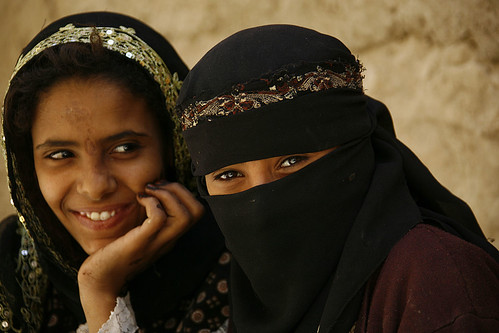
Hanan, a Yemeni girl, at the age of 21 years, believes that this age take a lot from her life by community vision for marriage for girls in Yemen, and she is now a graduate of a nursing schools in Sana’a and is working in a hospital, in spite of the cumbersome work, which requires the presence in the work before the 7 am and leave after 2 pm. Accordingly, she made for herself with other female of her friends in the same age a special world of their own.
“Qat chewing, is one of the happiest moments that, at least from my point of view, I have in my life to spend. It lets me forget a lot of concerns that are perched on my chest if I am alone in my home,” said Hanan.
As she kept on taking, she said that with her elder sister they got out for the same purpose, chewing. “My sister and I always try to find a solution to convince our parents to go out and chew. We just gave them deceptive convincing justification,” Hanan added.
She said that she chew from three to four times a week.
A Yemeni study has warned of the increasing use of Qat among Yemeni women, especially university students. The study showed that approximately 85 per cent of Yemeni women Qat-chewing, most of whom bought the best types of it.
Qat prices starts from about 3 dollars reaching 50 dollars.
Hanan added that the Yemeni women now started to think that this habit is one of their rights, and now a university students in particular, can not find anything wrong with handling of Qat and they think as they chew Qat they practice their rights because the man practices and therefore believes that it is normal.
Dr. Mohammed al-Hadad, a lecturer of social science, attributed this phenomenon to many reasons some of which are the non-existence of other good opportunities to fill the void, the imitation of young to old in families and unemployment which al-Hadad considered as basic serious factor leading young girls and boys to chew.
“Before this period, you will not find girls less than the age of 30 chewing Qat but now it is completely different. Carelessness and lack of parental control at home led to the persistent chewing Qat in addition to the lack of alternatives. Because people tend to form social bonds with others in their societies,” al-Hadad added.
He, furthermore, pointed out that this social phenomenon involves a large segment of people in Yemeni community which no one can deny. “We should take a positive step towards eliminating this phenomenon according to each individual potential in their respective work fields,” he declared. A recent academic study in Yemen confirmed that Qat plant causes a sexual impotence to 80% of men.
The study, which United Press International has a copy from, made by the President of Dhamar University, Ahmed al-Hadrani, stressed that the above mentioned statistics occurred to people who are at the age of 40 and after. He also explained that the study focused on the impact of Qat on the sexuality of women and men.
In the past, mothers or grandmothers are the ones who chew Qat but now it is different. Qat has become at the reach of girls, whether married or not. But it is surprising that there is no denying of this phenomenon or even attempts to reduce it.
“I have been chewing Qat for more than a year,” said Rabab Mohammed, 20, a secretary at a charitable foundation. “I chew Qat once every month. I am just doing this only to change the boring routine of life in addition to make social relations,” Rabab added.
Randa Abdu, 25 a house wife, said she chew Qat when she leaves home to her friends homes and some times with her husband.
“My husband’s work is out of the city which we live in. so when he comes back from travel spending a long time out I chew with him. I ding so only to meet his desires,” she added.
Some chewers of Qat say that Qat brings them the strength and a good memory in order to study well.
Recently, Studies and Economic Media Center (SEMC) announced that it completes producing documentary film on the risks of Qat in Yemen for chewers targeting youths. The produced film is in partnership with the Third Ayes Center and in cooperation with the World Bank (WB).
The Chief of the Center, Mustafa Nasser, clarified that the documentary film includes an overview of the most social, mental and health negative effects of Qat on individual and society. The film, in addition, includes a real supported scenes demonstrated with scientific evidence of damaging health.
He, furthermore, added that the film will be displayed in dozens of high schools in the Secretariat in order to lessen the phenomenon of the spread of Qat chewing among Yemeni youths.
The Film scenario and preparation is Mohammed Manna and under the supervision of Hana al-Adimi, the President of Third Eye Centre and Mustafa Nasser, Chairman of SEMC.
But at last, a serious positive step should be taken towards in order to eliminate this phenomenon according to each individual potential in their respective work fields.
Tuesday, January 18, 2011
Zahra Saleh: Exposed to Provocations and Intelligence Interrogated Me until 2 AM

Observed by: Mr. Alaa Isam
The Southern Movement leader, Zahra Saleh, said in an interview with the al-Awla Newspaper that she will "return to the squares of peaceful struggle, and that "the head of Aden Security Department" offered her "a national job in women's associations and administrative positions," but she refused.
She also assured the deterioration of her health as a result of "the unjust detention."
Zahra Saleh said: "I faced a lot of provocations, and the inspectors from the Departments of the Political and National Securities (intelligence) used to interrogated me until 2 am." And added wondering: "while visiting and contacting me by my relatives and friends was not allowed, visiting and contacting the women of the night clubs and prostitutes were allowed!".
Saleh explained that she was not charged with any accusations, only that the security authorities asked her to "write a pledge not to participate in the activities of the Southern Movement", a thing that was refused by her.
"The head of Aden Security Department asked me to give up the Southern Movement, and expressed his willingness to support me through establishing a group or party," Saleh added, and reporting what the head of Aden Security said: "it is better that you receive money from inside Yemen, rather than receiving it from outside."
She also said that head of Security threatened her saying: "your files are ready, you buy bombs for young people who cause explosions, including the latest bombings of al-Wahda in Aden, and pointed out to the death of 3 soldiers on the day before yesterday, and such acts of destabilization of security and public order."
Source: http://bit.ly/fUVLg6
Yemeni Authorities Release Two Southern Movement Activists in Aden

Observed by: Mr. Alaa Isam
Zahra Saleh, was released after launching a hunger strike before four days, was released this after noon, after being in jail since November 8, 2010.
Al-Kildi, was also released from the same detention center, just after a few hours after Saleh's.
The activists, al-Kildi, had been arrested in Sheikh Othman city in Aden, on December 20, 2010.
Woman dies as house shelled in Yemen fighting

Observed by: Mr. Alaa Isam
Residents said the shrapnel exploded during a battle pitting separatist insurgents, barricaded inside the town, against armed forces encircling Habilayn, a stronghold of the separatist Southern Movement.
A medical official said seven wounded people were admitted late Sunday to the nearby Radfan hospital in Lahij province. The army said four of its soldiers had also been wounded in Habilayn's skirmishes.
Yemen's army has regained control over several villages surrounding the town after gunmen retreated from the area, witnesses said. A security officer told AFP the fighting eased on Monday afternoon.
In neighbouring Shabwa province, a judicial policeman was killed and another wounded on Monday in an attack carried out by three hooded men in a car, a security official said, pinning the blame on Al-Qaeda.
Authorities in Shabwa earlier arrested 12 supporters of the Southern Movement for chanting separatist slogans during a pro-government rally, said a local official.
In addition to grappling with an increasingly violent southern separatist movement, the Sanaa government is battling a growing presence of Al-Qaeda fighters in the south.
South Yemen was independent from the time of the 1967 British withdrawal from Aden until the region united with the north in 1990.
The south seceded in 1994, sparking a short-lived civil war that ended with it being overrun by northern troops
Source: http://yhoo.it/dRp8eh
Thursday, January 13, 2011
Woman dies in south Yemen protest

Observed by: Mr. Alaa Isam
The woman was fatally injured when she was hit by the vehicle in Mukallah, the main town in Hadramawt province in the southeast of the country, when police intervened to disperse protesters, they said.
A second protester was wounded by gunfire and a third by tear gas, witnesses said.
A medical source confirmed that the dead woman and the two wounded had been taken to hospital in Mukallah.
During the demonstration, protesters chanted slogans demanding the release of jailed members of the secessionist Southern Movement.
In addition to grappling with an increasingly violent southern separatist movement, the Sanaa government is struggling against a growing presence of Al-Qaeda fighters in the south.
South Yemen was independent from the 1967 British withdrawal from Aden until the region united with the north in 1990. The south seceded in 1994, sparking a short-lived civil war that ended with it being overrun by northern troops.
Source: http://yhoo.it/gFkWLV
Tuesday, January 4, 2011
Saudi kills younger sister in Aden

Observed by: Mr. Alaa Isam
The Yemeni Ministry of Interior said M.A.A. Al-Thabhani was arrested for stabbing his sister repeatedly in the neck, chest and left hand. The motive behind the murder was cited as a domestic dispute.
Thursday, December 9, 2010
Adjust drugs and explosive device inside women car in the capital

Observed By: Mr. Alaa Isam
On December 17th 2010 , Security patrol belong to Old Sana’a security office has adjusted explosive charge (TNT) placed inside the hand bag; in addition of five envelopes containing drugs were inside women car her age looks like forty years old while 4 women were in the car and their age between 20 – 60 years old as well.
It is worthy to mention, this is not the first time to adjust a women who has bombs and drugs in the Capital of Yemen.
Wednesday, November 24, 2010
Yemeni Ladies support national team Just like Gulf ladies


Observed by: Mr. Alaa Isam
Thousands of beautiful Yemeni ladies attend the May 22nd Stadium in Aden where the Gulf2o matches will be held.
For the second day, the Yemeni ladies attended the match and their appearance in Soccer stadium is new phenomenon in Yemeni sports. The committee has been allocated for women in order to give them full freedom to encourage the national soccer team.
One of the Ladies who attend Said “I came to support our national team; but our dream shattered” saying her presence such other counterparts who loves sports.
“it is true our participation is new phenomenon but it was must on us to come and support our national team like Gulf girls who come to support their nationals teams” she added.
Finally, some reports talked about number of Islamic religious people in Yemen issues Fatwa to boycott the tournament. Relying on the fact that “Gulf20 does not devoid of dancers, males and females mixture, and import of Alcohol in hotels”.