Obama has already begun wrestling the latest batch of Mideast crises using a bait-and-switch approach. He praised “the courage and dignity” of Tunisians who toppled their repressive president, and last Friday he called on Egypt’s president to stand down from violence against protesters bent on toppling that government. Then Obama threatened to reconsider our $1.5 billion in annual aid to Egypt.
These new challenges may force Obama to make an ugly Hobson’s choice—endorse secular totalitarian-like regimes that support America’s security interests. The non-choice is the emergence of new Islamist regimes such as the one in Iran, a radical Islamic version of totalitarianism that opposes American security interests.
Obama has limited time to influence the latest crises before the affected countries fall into the clutches of radical Islamists.
Egypt is the latest country to fall into chaos and be threatened by an Islamist overtake. Since the republic’s founding in 1952, the country's army has been the guarantor of stability and will likely support President Hosni Mubarak, 82, and save the regime, especially now that Omar Suleiman, the country’s head of intelligence, is to become vice president and heir-apparent to the presidency. That appointment pleases the military, which strongly opposed Mubarak’s intent to make his son, a man without military experience, the next president.
But Egypt may still fall to Islamists. The man that wants to replace Mubarak is the former United Nations nuclear inspector Muhammad el-Baradei, who shielded the Iranian nuclear weapons programs for years and says as president he would recognize Hamas, the Palestinian terrorist group in Gaza, and end all sanctions.
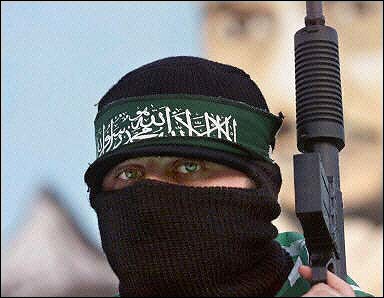
Last week the Muslim Brotherhood (MB), Egypt’s only organized opposition to Mubarak, connected with Saudi Arabia’s Wahhabi, suppliers of the 9/11 terrorists, joined the street protests, and is now calling for elections that would politically enable the group. MB members in Egypt’s parliament favor an Islamist state, ruled by Sharia law and at war with Israel and the U.S.
It is important to note that Egypt already has a significant Islamist proclivity that suggests widespread receptiveness to a future fundamentalist regime that the MB could leverage. Also, an Islamist strand exists among the military’s ranks that could prove influential if the revolution gets the upper hand.
The latest Pew poll finds considerable favor for Islamists among Egyptians (30% Hezbollah, 49% Hamas, and 20% al Qaeda). Egyptians, according to Pew, overwhelmingly (95%) welcome Islamic influence over their country’s politics, including 82% support for severe laws such as stoning for those who commit adultery, while 77% support whippings and hands cut off for robbery and 84% favor the death penalty for any Muslim who changes his religion.
Tunisia could fall to Islamists if it delays forming a new government. On Jan. 14, Tunisians ousted president Zine El Abidine Ben Ali after 23 years as the region’s most repressive leader. The Jasmine Revolution, which led to Ben Ali’s ouster, began in December after a college-educated street vendor burned himself to death in protest over Tunisia’s repression and poverty—and massive demonstrations ensued.
The interim government purged almost all of Ben Ali’s cabinet ministers and eradicated his ruling party. But no coherent opposition force has emerged to drive events because outlawed parties such as the once powerful Islamist groups are still barred from participating.
But protests continue in the center of Tunis demanding the interim government be broken up. Meanwhile, there are reports that Rachid Ghannouchi, the founder of the Tunisian Islamist party, is returning to the country to reenter the fray.
The ongoing chaos has created a vacuum that will inevitably be filled either by the military, emerging leaders such as Ghannouchi, or a known figure via a hurried election. Tunisia’s constitution calls for elections by March 15, but the interim government wants a six-month delay for the parties to engage the electorate, which will play into the Islamists’ hands.
Yemen is a prime candidate for an Islamist takeover because it is the Arab world’s most impoverished nation, and it has become a haven for al Qaeda militants. It was the site of the Islamist attack on the USS Cole in October 2000 in which 17 sailors were killed.
Last week tens of thousands of Yemenis joined demonstrations calling for President Ali Abdullah Saleh, 64, in power for 23 years, to step down. Their complaints include lack of jobs, outrage over abusive security forces, corrupt leaders, and a repressive political system. Saleh’s government is corrupt and exercises little control, and its main source of income—oil—will run dry in a decade.
Yemen is already host to many conflicts and radicals. There is a rebellion in the north with Iran-sponsored Shia radicals, and a Marxist succession movement in the south. Part of the country is also controlled by an al Qaeda affiliate in the southwestern corner of the Arabian Peninsula.
But Yemen is strategically important to the U.S. as an ally because al Qaeda has made it a base of operations. That organization and its leader, Anwar al-Awlaki, use the country to train, equip, and launch terrorists such as Umar Farouk Abdulmuttalab, who is accused of trying to detonate a bomb in his underwear during a Detroit-bound flight on Christmas Day 2009.
Lebanon’s new prime minister was installed by Hezbollah, Iran’s proxy terror group, which suggests that country is on the path to becoming an Islamist state. Najib Miqati, a billionaire and former prime minister, calls himself a consensus candidate in a badly divided country. His selection demonstrates a shift of power in the region away from the U.S. and its Arab allies and closer to Iran and Syria.
Antoine Zahra, a Lebanese lawmaker, said, “They [Hezbollah] will turn it into an isolated country, ostracized by the Arab world and the international community.”
Israeli Vice Prime Minister Silvan Shalom described the Hezbollah appointment as effectively “an Iranian government on Israel’s northern border.” Israel and Hezbollah fought a war in 2006.
Hezbollah, which the U.S. State Department identifies as a terrorist group, was forged with Iranian support in 1982 and is blamed for two attacks on the American embassy and the 1983 bombing of the U.S. Marine barracks in Beruit that killed 240.
Obama should do everything possible to help distressed Mideast countries avoid becoming radical Islamist states. That may require him to accept governments that are less than liberal democracies, which would earn him criticism, but such governments would more likely than not support our security interests.
 Democratic Yemen,
Southern Yemen or South of Yemen all the latter names refer to Democratic
Republic of Yemen. The latter is the last development of South Yemen that
entered the Yemeni Union Project with Arab Republic of Yemen or North Yemen if
you wish to call it.
Democratic Yemen,
Southern Yemen or South of Yemen all the latter names refer to Democratic
Republic of Yemen. The latter is the last development of South Yemen that
entered the Yemeni Union Project with Arab Republic of Yemen or North Yemen if
you wish to call it. After the Declaration
of Independence from the British colony in the November 30, 1967, the People's
Republic of South Yemen was declared, which has changed its name to People’s Democratic
Republic of Yemen, and was inherited by political leaders, followers of the
leftist Socialist.
After the Declaration
of Independence from the British colony in the November 30, 1967, the People's
Republic of South Yemen was declared, which has changed its name to People’s Democratic
Republic of Yemen, and was inherited by political leaders, followers of the
leftist Socialist.