Showing posts with label Terrorism. Show all posts
Showing posts with label Terrorism. Show all posts
Sunday, June 10, 2012


Tuesday, May 29, 2012
What we can expect more!?
 a year has passed since Ansar Al-Share'a announced their Islamic Emirate
in the Capital of Abyan (Zainjebar) beside Ja'ar city which changed its name to
(Weqar). For about year, the rest of
families who are still there get military attacks from Yemeni Army, and
military ships (US, British and French) that are close to Shoqra coast that belong
to Abyan Province as well as US drones. Also, people there speak about
participation of Saudi Air craft. Simply it is the hell, on daily bases, for
families who chose to stay rather than to flee to Aden schools.
a year has passed since Ansar Al-Share'a announced their Islamic Emirate
in the Capital of Abyan (Zainjebar) beside Ja'ar city which changed its name to
(Weqar). For about year, the rest of
families who are still there get military attacks from Yemeni Army, and
military ships (US, British and French) that are close to Shoqra coast that belong
to Abyan Province as well as US drones. Also, people there speak about
participation of Saudi Air craft. Simply it is the hell, on daily bases, for
families who chose to stay rather than to flee to Aden schools.Ansar Al-Share'a is an organic group belongs to AQAP aiming, based on their definition, to stretch to create Islamic caliphate .In Khor Makser district - Aden, that is close to Abyan Province, you can hear sounds of furious military battles breaking peace sound that is loved by Adeni families.

In Khor Makser district as well, clearly you can read statements on streets' walls such as (We want to implement Allah religious law), (We want an Islamic caliphate ) and (Coming to liberate Jerusalem ), as well as drawing the flag of Ansar Al-Share'a in their Islamic Emirate on the Wall of Yemenia Airline Office !
I met ,in person, young people live in Crater area - Aden, in an area called (Al-Khusaf). They joined Ansar Al-Share'a for an amount of money about 1000.000 YER as well as a Kalashnikov. And when I asked them about the return for this big amount of money that equals about 5000 USD and the Kalashnikov ?, " We pledged our prince on hearing and obedience, and commitment to implement what we are ordered at any time " one of them answered.

Among the five young men I met, no one finished his university degree nor is married and they all shared same backgrounds
(Family disputes and low economic situation). They do not seem to be Islamic extremists too!
One of them assured me that there are many deployed in all districts of Aden.
A while ago, a website called (Aden News Agency) reported about a Place that is believed to be a jihadi Islamic groups
practicing venue at night in a mountain called "Qwareer" between Serah and Malla'a !
Back to Abyan, recently Mr. President of Yemen "Hadi" made his
orders to liberate the capital of Abyan and Ja'ar city .But the
fierce fighting on the ground drive me to confirm that
the process of liberation from
the grip of Ansar Al-Share'a may need more than only military operations and U.S drones !
Video broadcasted by Maded News Agency that belongs to Ansar Al-Share'a,
shows families accepted to be ruled by Allah religious law, which is implemented by Ansar Al-Share'a ,and they thanked
them for their efforts !

In their Islamic Emirate ,Ansar Al-Share'a did not focus too much on
military side, but made services to people who wish to rest years of suffering ! Services like Financial assistance and food in addition to
medical services, electricity and water. The Two services :electricity
and water that are ,in the economic and commercial capital of united Yemen
(Aden), cut off around 12 hours a day and the water stopped for about 24 hours a week!
In fact, what happened in Abyan tells us clearly that
the ordinary citizen does not care
about what politicians are saying nor care about the fight
against terrorism, not even the unity of
Yemen! .Instead they care about who will give
them the most basic necessities
of life in areas not accustomed
to such a situation before the time of the Yemeni unity , as the
services and food were provided by the socialist government for all citizens in south Yemen.
Finally, the Military operations and U.S drones will support the idea of
Ansar Al-Share'a members distribution around Yemen! And Perhaps
will be usual to see the remains of the dead bodies here and there across Yemen! who knows
! Hunger ravaging the citizens like wildfire!
written by: Alaa Isam - Aden
Sunday, April 22, 2012
Monday, January 16, 2012
Monday, March 7, 2011
Are the Mideast uprisings strengthening al Qaeda?
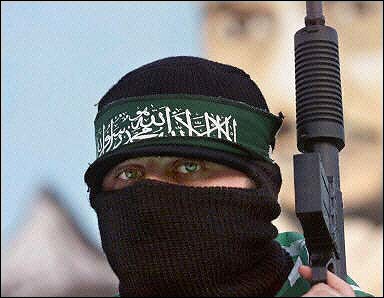
It isn't Osama bin Laden who's out there toppling autocratic Arab regimes — but will he and his terrorist network benefit anyway?
Best Opinion: Wash. Post, Yemen Observer, Al Arabiya
As Libya slips deeper into a bloody civil war, unyielding leader Moammar Gadhafi insists that al Qaeda is behind the revoltagainst him. Meanwhile, many, including Sen. John McCain (R-Ariz.), argue that the uprisings in Libya and across the Arab world are a "repudiation" of Osama bin Laden's network of terrorists. Others aren't so sure. Will the uprisings unleash pent-up support for Islamist extremism?
The revolts will strengthen al Qaeda: The uprisings represent "an enormous strategic step forward for al Qaeda," says Michael Scheuer at The Washington Post. Each dictatorship that falls creates "a more religion-friendly" political environment where bottled-up support for Muslim extremists will now gush forth. And with Egypt's Hosni Mubarak gone, Israel has lost its last "anti-Islamist shield." For bin Laden, who has declared war against both Israel and "the Arab tyrannies," this is a double victory. "Why the Mideast revolts will help al Qaeda"
Actually, the uprisings make al Qaeda irrelevant: Al Qaeda has never been "more marginal than it is now," says Shahid Alam at the Yemen Observer. It recruits frustrated young people by calling for "terrorist attacks against local tyrannies or their foreign backers." But these uprisings, which have largely succeeded without violence from the protesters, are robbing the organization of its lifeblood, and undercutting its rationale. "Washington, al Qaeda, and the Arab revolt"
Al Qaeda is down, but not yet out: Al Qaeda was "caught by surprise,"says Musa Keilani at Al Arabiya, and it's trying to "muscle its way into the unrest" after the fact. But if new Arab leaders can guarantee stability and jobs, the region's "hopeful youth" will "shun al Qaeda." The real question is whether the governments replacing toppled regimes can satisfy protesters' demands. If the new regimes fail, don't count al Qaeda out. "Priorities for post-revolt leaders"
source: http://bit.ly/guBsmA
Sunday, February 13, 2011
Awlaki urges support for jailed Yemeni journalist

Observed by: Mr. Alaa Isam
U.S. radical Muslim cleric Anwar al-Awlaki has called for support for a journalist jailed in Yemen after being convicted of helping al Qaeda, according to an audio recording posted on the Internet on Sunday.
"The free-spirited journalist Abdulelah Haidar Shai was imprisoned because he exposed American crimes in Yemen," said the speaker in the recording, who sounded like Awlaki, a frequent propagandist for al Qaeda's Yemen-based regional wing.
"Abdulelah was doing his journalistic duty and every journalist ..., his tribe and all Yemenis should carry out their duty to support him," said Awlaki, who is of Yemeni origin and believed to be hiding in southern Yemen. The recording's authenticity could not be independently verified.
Shai, a Yemeni al Qaeda expert, was sentenced to five years in prison in January after being convicted of aiding the global militant group. He has denied the charges.
Yemen is under international pressure to quash the resurgent al Qaeda wing in the impoverished Arabian Peninsula state, at the same time as it struggles to control southern secessionists and to cement a fragile truce with rebels in the north.
President Ali Abdullah Saleh, in power for 30 years, has faced growing protests in recent weeks from thousands of Yemenis, inspired by uprisings that topped Egypt's President Hosni Mubarak and Tunisia's President Zine al-Abidine Ben Ali.
Hundreds of Yemeni protesters clashed with police blocking them from marching to the presidential palace in Sanaa on Sunday, witnesses said.
Awlaki drew attention to leaked U.S. diplomatic cables that showed Saleh secretly offered U.S. forces open access to his country to launch strikes against al Qaeda targets.
"The crime of the Yemeni government in collaboration with the Americans in bombing the people of Yemen should not be forgotten, and honest media people should take the banner from Abdulelah and conclude the journey he began," Awlaki said.
In early 2009, Shai interviewed Awlaki, who is wanted dead or alive by Washington. The footage was broadcast by the Arab news television network Al Jazeera.
Yemen has been at the centre of Western security concerns after the al Qaeda branch based there launched failed plots to bomb cargo airliners in October and to destroy a U.S.-bound passenger plane in December 2009.
(Reporting by Firouz Sedarat; Editing by Elizabeth Fullerton)
Source: http://yhoo.it/fx51UN
Sunday, December 12, 2010
Foreign Policy: Yemen's Double Game


Observed By: Mr. Alaa Isam
BEIRUT— Years of U.S. diplomatic cables show Yemen's president, Ali Abdullah Saleh, unswervingly determined to get more war materiel and cash from the United States. In some meetings, Saleh pushes the United States to join the fight against Yemen's northern Houthi rebels directly with gifts of helicopters, aircraft, and armored vehicles; in others, Saleh asks for specific weapons but pledges not to use them against the Houthis.
"We won't use the helicopters in Sa'ada, I promise. Only against al-Qaeda," Saleh told U.S. Gen. David Petraeus in a January 2009 meeting. Saleh made his pledge, apparently unsolicited, in reference to a northern Yemen city that is the base of a regional rebellion led by the country's Houthi Shiite dissidents.
In a September 2009 session with White House counterterrorism advisor John Brennan, Saleh, frustrated, presses the United States to give armored vehicles, airplanes, and ambulances specifically to his campaign against the Houthi rebels. "The Houthis are your enemies too," Saleh tells Brennan.
Brennan deflects that request. "The USG [U.S. government] is prohibited by law from providing military support to the [Yemeni government] to be used against the Houthis since the USG considers the group a domestic insurgency," he is quoted telling Saleh.
At that time, however, Saleh and his military chiefs were already diverting the U.S.-supported counterterrorism unit -- a commando group funded, trained, and equipped by the United States and Britain from 2002 on to take a lead role fighting al Qaeda in Yemen -- as well as possibly U.S. armored vehicles and Humvees, against the Houthis, then-U.S. Ambassador Stephen Seche notes in another cable. Seche uses the term ROYG to refer to the Republic of Yemen government, and CTU and CT to refer to the counterterrorism unit.
"The ROYG, desperate to defeat the Houthis at any cost, has largely ignored USG concerns regarding deployment of the CTU to Sa'ada,'' Seche wrote in December 2009. "The CTU has been unable to go after genuine terrorist targets like al-Qaeda in the Arabian Peninsula (AQAP) while it has been tied down in Sa'ada."
The United States this year more than doubled its military aid to Yemen in a push to encourage Saleh's government to do more against what many President Barack Obama's administration see as the world's most aggressive branch of al Qaeda.
Al Qaeda in the Arabian Peninsula (AQAP), a Yemen-based union of Saudi and Yemeni al Qaeda groups, has been linked to the failed December 2009 attempt to blow up a Detroit-bound jet and the recent printer-cartridge bombs, among several other successful and unsuccessful attacks targeting Americans and their allies.
The Yemeni Army and other regular forces are ill-trained, ill-equipped, and riven by corruption that has tens of thousands of "ghost soldiers" on the payrolls so that commanders, tribal leaders, and others can draw the salaries of the nonexistent soldiers and sell their gear on the black market, according to a 2006 assessment by the U.S. Agency for International Development.
As a result, the United States and Britain have focused on trying to build up Yemeni commando units -- commanded by Saleh's son and nephew -- in hopes Yemen will use them against al Qaeda. As one cable notes, the United States since 2002 has spent more than $115 million equipping Yemeni counterterrorism forces, including $5 million in training in 2009 alone.
In Seche's December 2009 cable, named and unnamed Yemeni military officials confirm that Yemen has diverted the counterterrorism unit in particular to fight Yemeni rebels. They shrug off U.S. protests that the commandos were meant to fight al Qaeda.
"The war against the Houthis is not a distraction from the CT fight. It is the CT fight," a Yemeni colonel insisted to U.S. Embassy political officers in December 2009.
The Houthis are a family-led insurrection of Zaidi Shiites who began fighting Yemeni forces in 2004. The Houthis say they seek greater sovereignty for northern Yemen. The war has now gone through six rounds; though the conflict is currently frozen, no one is confident that it is over. At least 200,000 people remain displaced by the fighting.
Despite Saleh's frequent claims that they are linked to both al Qaeda and Iran, no such evidence has surfaced against the Houthis. It is unlikely that al Qaeda -- a Sunni Muslim group that sees Shiite Muslims as takfiri, or nonbelievers, to be killed -- would ally long-term with a Shiite group. U.S. officials are seen elsewhere in the cables denying that Iran is supplying the Houthis.
International rights groups and civilians from the area of the rebellion accuse Saleh's government of using heavy-handed tactics that inflict heavy civilian casualties, including deploying helicopter gunships and warplanes to bomb and rocket civilian neighborhoods in the north. Saleh's government has barred journalists from most travel to Saada.
Saleh is also facing growing insurrection in Yemen's south. Both southern and northern Yemenis say Saleh's more than 30-year-old regime discriminates against their regions when it comes to jobs and development.
While the Houthis have used anti-Israeli and anti-American slogans, they are not known to have pursued any attacks outside Yemen. The United States for years has refused Yemen's requests to classify the Houthis as a terrorist group.
While Saleh has allegedly bombed towns harboring Houthi rebels, for most of the past decade he has been far more tolerant of al Qaeda leaders in Yemen, pursuing a strategy of trying to co-opt rather than kill them. At lunch with a U.S. envoy in 2007, he blandly recounted having gotten together for a chat two weeks earlier with Jamal al-Badawi, the architect of al Qaeda's 2000 bombing of the USS Cole, which killed 17 people. Saleh promised the U.S. envoy that Badawi -- freed by Yemen despite his conviction in the Cole bombing -- was under "house arrest" and "under my microscope." Badawi 's whereabouts today are unclear, however.
In his cable, Seche notes that the U.S.-trained force is said to be taking "heavy casualties" in the fighting against the northern rebels because U.S. special-operations forces helped train the commandos for lightning raids rather than sustained fighting.
In his cable, Seche notes that the U.S.-trained force is said to be taking "heavy casualties" in the fighting against the northern rebels because U.S. special-operations forces helped train the commandos for lightning raids rather than sustained fighting.
One source, whose name is redacted in the cable, says that the Yemenis want to adapt the counterterrorism unit's training to a style more like that of the Americans in Afghanistan, "suggesting the CTU expects to continue to use its forces in Sa'ada," Seche writes.
"While U.S. concerns over diversion of troops and equipment have been acknowledged, they have clearly not resulted in a significant change of ROYG focus from the Houthis to AQAP," the U.S. diplomat says.
Yemeni critics of Saleh's government have long warned that Saleh's security forces would likely turn any U.S. military aid against southern separatists and northern rebels rather than al Qaeda.
"While U.S. concerns over diversion of troops and equipment have been acknowledged, they have clearly not resulted in a significant change of ROYG focus from the Houthis to AQAP," the U.S. diplomat says.
Yemeni critics of Saleh's government have long warned that Saleh's security forces would likely turn any U.S. military aid against southern separatists and northern rebels rather than al Qaeda.
U.S. military sources in 2009 privately cited repeated rumors out of Saada that Americans themselves have been spotted in the northern war zone -- though it's easily conceivable that Yemenis could mistake a well-armed Yemeni commando for an American.
In an August interview in Sanaa, Yemen's capital, a leading Yemeni arms dealer told me that U.S.-made rifles and Humvees were showing up in the Houthi-government fight in Saada. U.S. and British diplomats played down that possibility, stressing in public comments in a November forum on Yemen in London that their governments were working hard to track the end use of Western-donated military aid in Yemen.
As Seche's comments showed, however, U.S. diplomats already knew at the time that Saleh and his security forces were diverting U.S. training, funding, and, likely, equipment, against the northern rebels.
U.S. diplomats are generally refusing to comment on specific WikiLeaks cables. The U.S. Embassy in Sana'a didn't respond to an email asking whether anything had changed to keep Yemen from using U.S. training, funding, and equipment against its domestic opposition in the future.
It's unclear whether it's illegal for the United States to continue tolerating Yemen's diversion of U.S. training, funding, and, possibly, equipment, as Brennan suggested. Hurst Hannum, a professor of international law at Tufts University, said the United States likely would violate international law only if it contributed U.S. troops directly to Yemen's fight against its rebels. U.S. law on the issue is "filled with ambiguity, loopholes, and executive waivers," Michael J. Glennon, also a Tufts professor of international law, said.
If not illegal, it certainly seems unwise. Allowing Yemen to draw the United States into standing a mercenary army for Saleh against his domestic opponents, while hoping he uses it against al Qaeda as well, implies a triumph of wishful thinking over experience.
And though the Houthi conflict was long one of the world's most obscure conflicts, and rightfully so, it grows less so by the year. Saudi Arabia -- which may become a proxy conduit for more advanced U.S. military help for Yemen -- entered the conflict last year, using its warplanes to bomb Houthi positions inside Yemen (as the cables confirm).
U.S. diplomats worried then about Iran entering the conflict on the side of the Shiite rebels. Iran, by all evidence, wisely refrained. The United States, needing neither a third war zone nor a regional Middle East war, should be so disciplined.
*Ellen Knickmeyer - Foreign Policy
In an August interview in Sanaa, Yemen's capital, a leading Yemeni arms dealer told me that U.S.-made rifles and Humvees were showing up in the Houthi-government fight in Saada. U.S. and British diplomats played down that possibility, stressing in public comments in a November forum on Yemen in London that their governments were working hard to track the end use of Western-donated military aid in Yemen.
As Seche's comments showed, however, U.S. diplomats already knew at the time that Saleh and his security forces were diverting U.S. training, funding, and, likely, equipment, against the northern rebels.
U.S. diplomats are generally refusing to comment on specific WikiLeaks cables. The U.S. Embassy in Sana'a didn't respond to an email asking whether anything had changed to keep Yemen from using U.S. training, funding, and equipment against its domestic opposition in the future.
It's unclear whether it's illegal for the United States to continue tolerating Yemen's diversion of U.S. training, funding, and, possibly, equipment, as Brennan suggested. Hurst Hannum, a professor of international law at Tufts University, said the United States likely would violate international law only if it contributed U.S. troops directly to Yemen's fight against its rebels. U.S. law on the issue is "filled with ambiguity, loopholes, and executive waivers," Michael J. Glennon, also a Tufts professor of international law, said.
If not illegal, it certainly seems unwise. Allowing Yemen to draw the United States into standing a mercenary army for Saleh against his domestic opponents, while hoping he uses it against al Qaeda as well, implies a triumph of wishful thinking over experience.
And though the Houthi conflict was long one of the world's most obscure conflicts, and rightfully so, it grows less so by the year. Saudi Arabia -- which may become a proxy conduit for more advanced U.S. military help for Yemen -- entered the conflict last year, using its warplanes to bomb Houthi positions inside Yemen (as the cables confirm).
U.S. diplomats worried then about Iran entering the conflict on the side of the Shiite rebels. Iran, by all evidence, wisely refrained. The United States, needing neither a third war zone nor a regional Middle East war, should be so disciplined.
*Ellen Knickmeyer - Foreign Policy
Source: http://bit.ly/ftZFRT
Subscribe to:
Posts (Atom)